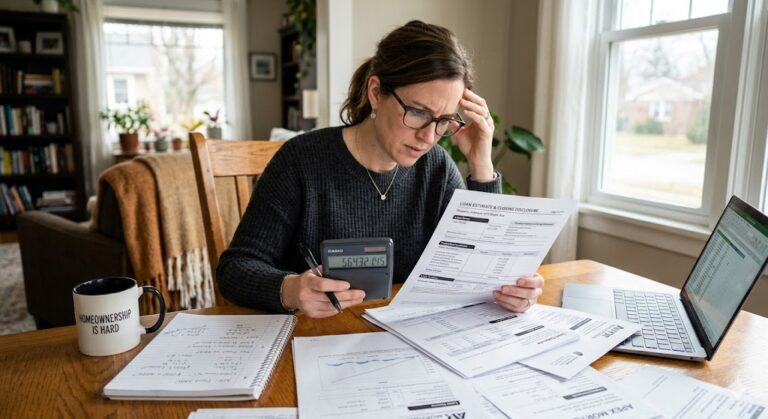
Refinancing a mortgage involves replacing an existing home loan with a new one, often with different terms. Homeowners typically consider refinancing to reduce monthly payments, adjust loan duration, or access home equity.
While refinancing can offer financial benefits, it also comes with costs and considerations that should be carefully evaluated. Understanding both the advantages and potential drawbacks helps homeowners decide whether refinancing aligns with their financial goals.
What Refinancing Means for Homeowners

Refinancing replaces your current mortgage with a new loan. The new loan may have a different interest rate, term length, or structure.
Common reasons homeowners refinance include:
- Lowering the interest rate
- Reducing monthly payments
- Switching from adjustable to fixed rates
- Accessing home equity through cash-out refinancing
For example, a homeowner who refinances at a lower interest rate may reduce their monthly payment or total interest paid over time.
Key Benefits of Refinancing
Refinancing can provide several advantages depending on market conditions and individual circumstances.
| Benefit | How It Helps |
|---|---|
| Lower Interest Rate | Reduces total loan cost |
| Lower Monthly Payment | Improves cash flow |
| Shorter Loan Term | Pays off mortgage faster |
| Cash-Out Option | Access home equity |
| Rate Stability | Switch to fixed-rate loan |
A lower interest rate is one of the most common reasons for refinancing. Even a small rate reduction can lead to noticeable savings over the life of the loan.
Potential Drawbacks to Consider

Refinancing is not always beneficial, especially if the costs outweigh the savings.
Common drawbacks include:
Closing costs
Refinancing often involves fees such as appraisal, origination, and title costs.
Extended loan term
Resetting the loan term may increase total interest paid over time.
Qualification requirements
Lenders may require strong credit, income verification, and appraisal approval.
Break-even period
It may take time for monthly savings to offset upfront costs.
For example, if refinancing saves $150 per month but costs $3,000 in fees, it would take about 20 months to break even.
Types of Mortgage Refinancing
Homeowners can choose from different refinancing options based on their needs.
Rate-and-term refinance
Adjusts interest rate or loan length without changing the loan amount significantly.
Cash-out refinance
Allows homeowners to borrow against home equity and receive cash.
Cash-in refinance
Involves paying down part of the loan to reduce the balance or improve terms.
Each type serves a different financial purpose and should be evaluated carefully.
Pro Insight
Many homeowners focus on monthly savings, but experienced borrowers also calculate the break-even point. This helps determine how long it takes for refinancing benefits to outweigh the upfront costs.
If you plan to move before reaching that point, refinancing may offer limited financial advantage.
When Refinancing May Make Sense

Refinancing may be worth considering in situations such as:
- Interest rates have decreased since your original loan
- Your credit profile has improved
- You want to switch loan types
- You plan to stay in the home long enough to recover costs
For example, a homeowner who secured a mortgage during higher interest rates may benefit from refinancing when rates decline.
Quick Tip
Before refinancing, compare total loan costs—not just monthly payments. A lower payment may come with a longer loan term or higher total interest.
Frequently Asked Questions
What is mortgage refinancing?
Refinancing replaces your existing mortgage with a new loan that may have different terms, rates, or structure.
Does refinancing always lower monthly payments?
Not always. Payments may increase if you choose a shorter loan term or borrow additional funds.
How much does refinancing cost?
Costs vary but often include closing fees, appraisal costs, and lender charges.
How long should you stay in your home after refinancing?
Many homeowners aim to stay long enough to reach the break-even point where savings exceed costs.
Can you refinance with bad credit?
It may be possible, but options and terms are often more limited with lower credit scores.
Conclusion
Refinancing a mortgage can offer meaningful financial benefits, including lower interest rates, reduced monthly payments, or access to home equity. However, it also involves costs and long-term considerations that should not be overlooked.
By evaluating both the pros and cons, calculating potential savings, and considering how long you plan to stay in your home, you can make a more informed refinancing decision.
Trusted U.S. Resources
https://www.consumerfinance.gov
https://www.hud.gov
https://www.freddiemac.com
https://www.usa.gov
This article is for general informational purposes only and does not provide legal, financial, medical, or professional advice. Policies, rates, and regulations may change over time.
About the Author