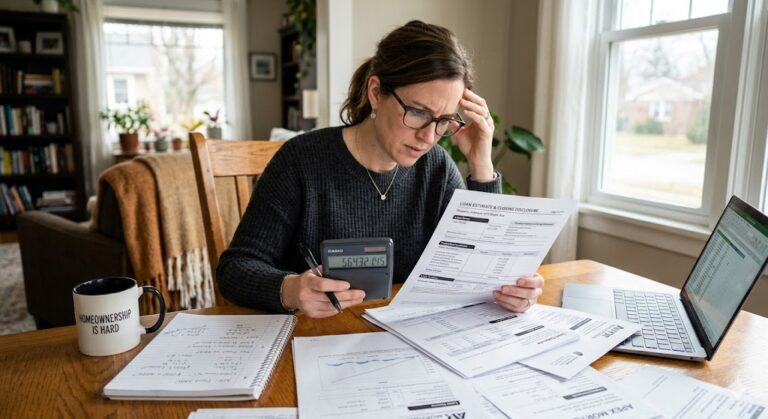
For many first-time buyers, the biggest question isn’t whether to buy a home—it’s how much to put down. The answer isn’t one-size-fits-all. While traditional advice often suggests 20%, today’s financing options allow much lower down payments, depending on your loan type and financial profile.
Understanding the trade-offs helps you choose a number that fits your situation—not just a rule of thumb.
Typical Down Payment Ranges
Most first-time buyers fall into a range well below 20%.
Here’s what’s common:
- 0% down for certain government-backed loans
- 3% to 5% down for many conventional and first-time buyer programs
- 10% to 20% down for stronger financial positioning
The right amount depends on your credit, income, and long-term plans—not just what lenders allow.
Minimum Down Payment by Loan Type
Different loan programs set different minimums.
| Loan Type | Minimum Down Payment | Key Notes |
|---|---|---|
| Conventional | 3% | Stronger credit usually required |
| FHA | 3.5% | More flexible credit standards |
| VA | 0% | For eligible military buyers |
| USDA | 0% | Limited to certain locations |
These options make homeownership accessible even without large savings upfront.
Why 20% Is Still Mentioned
The 20% benchmark comes from one key advantage—avoiding private mortgage insurance (PMI).
With 20% down, you typically:
- Eliminate PMI costs
- Reduce your monthly payment
- Build equity faster
However, waiting to reach 20% can delay buying, especially in rising markets.
Pro Insight
A smaller down payment isn’t necessarily a disadvantage. Many buyers choose to put less down and keep extra cash for emergencies, repairs, or investments.
Liquidity—having cash available—can be just as important as equity, especially in the first few years of homeownership.
Upfront Costs Beyond the Down Payment

Your down payment is only part of the upfront cost.
You should also plan for:
- Closing costs (typically 2%–5% of the home price)
- Home inspection and appraisal fees
- Moving and initial setup expenses
A simple scenario:
If you buy a $300,000 home with 5% down ($15,000), you may still need an additional $6,000–$15,000 for closing and related costs.
Quick Tip
Avoid using all your savings for the down payment. Keeping a financial cushion can help cover unexpected repairs or expenses after moving in.
Pros and Cons of Lower vs Higher Down Payments
| Down Payment Level | Pros | Cons |
|---|---|---|
| Low (0%–5%) | Easier to buy sooner, keep cash | Higher monthly payments, PMI |
| Medium (10%) | Balanced approach | Still may include PMI |
| High (20%+) | Lower monthly cost, no PMI | Requires more savings upfront |
Each option involves trade-offs between affordability now and cost over time.
Common Mistakes to Avoid

First-time buyers often run into similar issues:
- Waiting too long trying to reach 20%
- Forgetting about closing costs
- Draining all savings for the down payment
- Not comparing loan options
A balanced approach usually works better than aiming for a single target number.
Frequently Asked Questions
Can I buy a house with no down payment?
Yes. VA and USDA loans offer zero-down options if you meet eligibility requirements.
Is 20% required for a first home?
No. Many buyers put down far less, especially with first-time buyer programs.
What is a good down payment amount?
For many buyers, 5% to 10% is a practical balance between affordability and manageable monthly payments.
Does a higher down payment lower my interest rate?
It can help, but credit score and overall financial profile also play a major role.
Should I wait to save more before buying?
It depends on your situation. Waiting can reduce costs, but rising home prices may offset those savings.
Conclusion
The “right” down payment for your first home depends on your financial comfort, not just lender minimums. While larger down payments reduce long-term costs, smaller ones can help you enter the market sooner and maintain flexibility.
The goal isn’t to hit a perfect percentage—it’s to choose a level that supports both your purchase and your financial stability afterward.
https://www.hud.gov
https://www.consumerfinance.gov
https://www.usa.gov/housing
https://www.fanniemae.com
This article is for general informational purposes only and does not provide legal, financial, medical, or professional advice. Policies, rates, and regulations may change over time.
About the Author