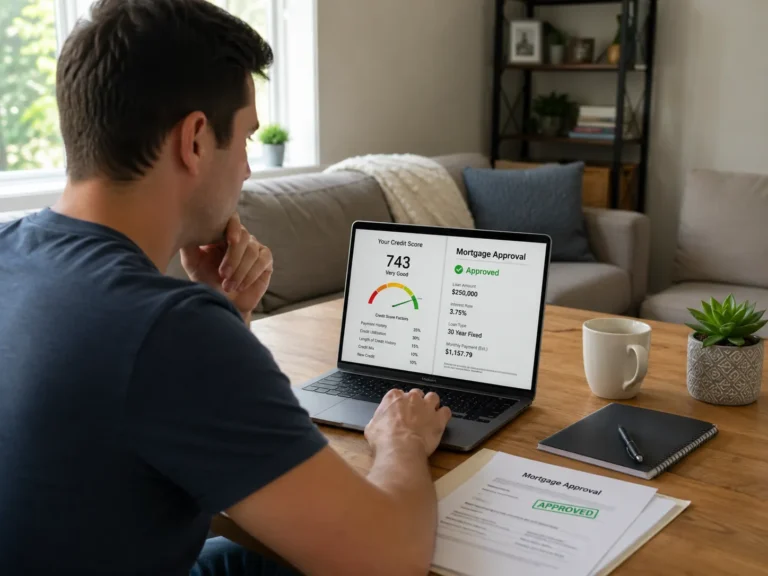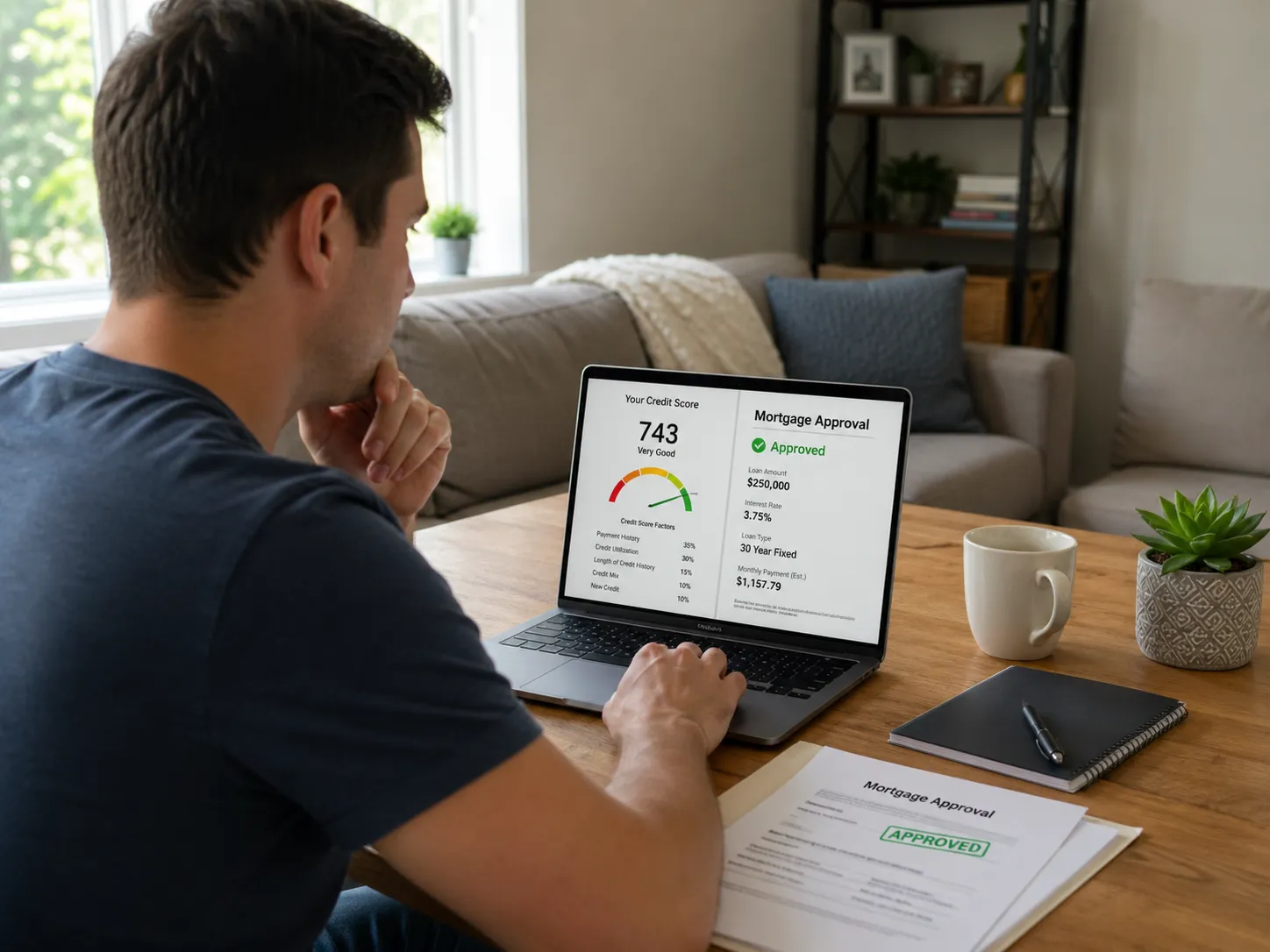
Buying your first home in the United States comes with a set of financial and eligibility requirements. While programs vary by lender and loan type, most first-time buyers follow a similar framework involving credit, income, and down payment readiness.
Understanding these requirements early can make the process smoother and more predictable.
What Qualifies You as a First Time Buyer
In the U.S., a “first-time home buyer” doesn’t always mean you’ve never owned a home. You may qualify if:
- You have not owned a home in the past 3 years
- You’re buying your primary residence
- You meet income or program eligibility requirements
This definition allows more people to access first-time buyer programs.
Credit Score Requirements
Your credit score plays a major role in determining loan eligibility and terms.

Typical ranges include:
- 580+ credit score → qualifies for low down payment FHA loans
- 500–579 → may still qualify but requires higher down payment
- 620+ → often needed for conventional loans
For example, FHA loans allow a 3.5% down payment with a 580 score, while lower scores require at least 10% down (fha.com).
Down Payment Requirements
The amount you need upfront depends on the loan type.
| Loan Type | Minimum Down Payment | Typical Buyer Profile |
|---|---|---|
| FHA Loan | 3.5% (580+ credit) | First-time buyers |
| Conventional Loan | 3%–5% | Stronger credit |
| VA Loan | 0% | Military/veterans |
| USDA Loan | 0% | Rural area buyers |
FHA loans are especially popular because they allow lower upfront costs and flexible credit standards (hud.gov).
Pro Insight
Many buyers assume they need 20% down, but that’s not required for most first-time programs. Lower down payments are common—though they may include additional costs like mortgage insurance.
Income and Employment Requirements
Lenders want to ensure you can repay the loan. Most require:
- Stable employment history (usually 2 years)
- Proof of income (pay stubs, tax returns)
- Debt-to-income ratio around 43% or lower (fha.com)
Higher income stability improves approval chances and loan terms.
Property Requirements
Not every home qualifies for every loan program.
Common rules include:
- The home must be your primary residence (fha.com)
- It must meet safety and appraisal standards
- Investment properties typically do not qualify for first-time buyer programs
These rules ensure the loan is used for housing, not speculation.
Additional Costs to Prepare For
Buying a home involves more than just the down payment.
You may also need:
- Closing costs (typically 3%–6% of purchase price) (rocketmortgage.com)
- Mortgage insurance (for low down payment loans)
- Property taxes and homeowners insurance

Planning for these expenses prevents last-minute surprises.
Quick Tip
Look into local and state assistance programs. Many offer grants or low-interest loans that can help cover your down payment or closing costs.
Common First Time Buyer Programs
Several programs are designed to make homeownership more accessible:
- FHA loans → low down payment and flexible credit
- VA loans → no down payment for eligible service members
- USDA loans → no down payment for rural areas
- HomeReady/Home Possible → low down payment for moderate-income buyers (themortgagereports.com)
These programs often reduce upfront costs and expand eligibility.
Real World Example
A first-time buyer with:
- Credit score: 600
- Savings: 5% down
- Stable income
They may qualify for an FHA loan with a low down payment, manageable credit requirements, and access to assistance programs.
Instead of waiting to save 20%, they can enter the market sooner while maintaining financial flexibility.

Frequently Asked Questions
What credit score do I need to buy a house in the USA
Many first-time buyers qualify with a score of 580 or higher, though some loans allow lower scores with higher down payments.
Do I need 20% down to buy my first home
No, many programs allow as little as 3% to 3.5%, and some offer zero down options.
What income is required to buy a home
There is no fixed income requirement, but lenders evaluate your debt-to-income ratio and job stability.
Can I get help with my down payment
Yes, many state and local programs offer grants or assistance for first-time buyers.
Is mortgage insurance required
It is usually required for loans with low down payments, such as FHA or conventional loans under 20%.
Conclusion
First-time home buyer requirements in the U.S. are more flexible than many people expect. With options for lower credit scores, smaller down payments, and assistance programs, homeownership is accessible to a wide range of buyers.
By understanding the key requirements—credit, income, and upfront costs—you can approach the process with more confidence and a clearer plan.
https://www.hud.gov
https://www.consumerfinance.gov
https://www.usa.gov/housing-help
https://www.fhfa.gov
This article is for general informational purposes only and does not provide legal, financial, medical, or professional advice. Policies, rates, and regulations may change over time.
About the Author