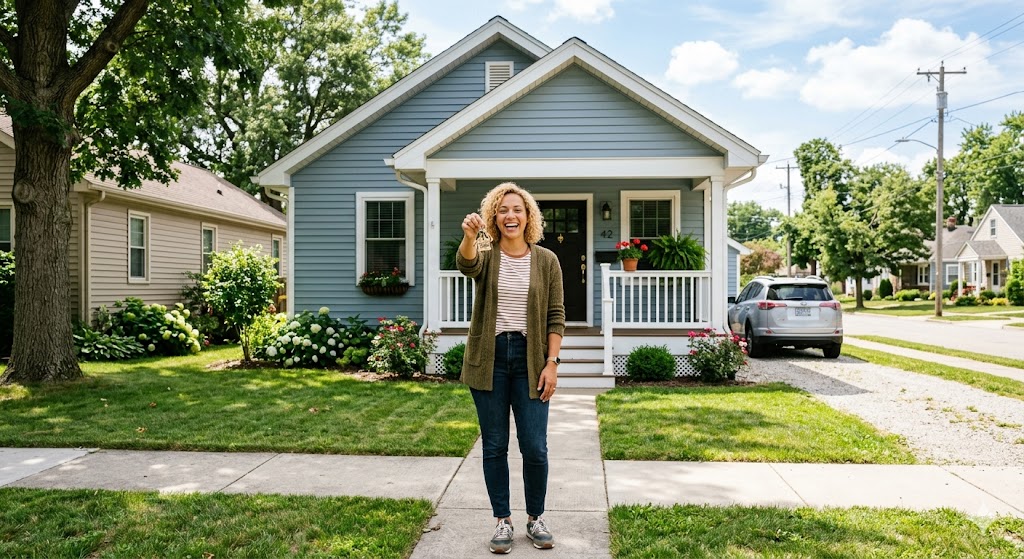
Finding affordable first home financing is one of the biggest challenges for new buyers. The right loan can lower upfront costs, reduce monthly payments, and make homeownership more realistic—especially if you’re working within a tight budget.
Understanding your options early can help you move forward with clarity instead of guesswork.
What Makes Home Financing Affordable

Affordable financing isn’t just about a low interest rate. It’s a combination of factors that determine how manageable your loan is over time.
Key elements include:
- Down payment requirements
- Monthly payment size
- Interest rates
- Mortgage insurance costs
- Loan flexibility
A loan that looks cheaper upfront may cost more long term, so it’s important to look at the full picture.
Common Affordable Financing Options
Several loan programs are designed specifically to help first-time buyers reduce upfront costs.
FHA Loans
- Low down payment (around 3.5%)
- Flexible credit requirements
- Accessible for many first-time buyers
Conventional Loans (Low Down Payment)
- Some programs allow as little as 3% down
- Lower long-term costs if you qualify
VA Loans
- No down payment for eligible military borrowers
- No monthly mortgage insurance
USDA Loans
- Zero down payment
- Available in eligible rural and suburban areas
Each option balances accessibility and cost differently.
Comparing Affordable Loan Options
| Loan Type | Down Payment | Monthly Cost Impact | Best Fit |
|---|---|---|---|
| FHA Loan | ~3.5% | Higher due to insurance | Lower credit, limited savings |
| Conventional (Low Down) | ~3% | Lower long-term cost | Stronger credit |
| VA Loan | 0% | Often lower overall | Eligible military buyers |
| USDA Loan | 0% | Lower but location-based | Rural/suburban buyers |
The right choice depends on your financial profile and eligibility.
Pro Insight
Affordability is often about timing. Some buyers benefit more from entering the market sooner with a higher-cost loan than waiting years to save for a perfect scenario.
The key is ensuring the monthly payment remains sustainable.
Down Payment Assistance Programs

Many buyers overlook assistance programs that can significantly reduce upfront costs.
These programs may offer:
- Grants that don’t need to be repaid
- Low-interest secondary loans
- Deferred payment options
Eligibility usually depends on income, location, and whether you’re a first-time buyer.
Quick Tip
Check local and state programs early in your search. Some require pre-approval or education courses before you can apply.
Real-World Scenario
A buyer has steady income but limited savings.
- Without assistance, they delay buying for several years
- With a low-down-payment loan and assistance program, they purchase sooner
Although their monthly cost is slightly higher, they begin building equity earlier.
Different paths can still lead to long-term stability.
How to Lower Your Financing Costs
- Improve your credit score before applying
- Compare multiple lenders
- Consider a slightly smaller home price
- Increase your down payment if possible
- Look for assistance programs
Small adjustments can significantly affect affordability.
Common Mistakes to Avoid
- Focusing only on the lowest monthly payment
- Ignoring mortgage insurance costs
- Not comparing loan options
- Skipping pre-approval before house hunting
These mistakes can lead to unexpected financial strain.
Frequently Asked Questions
What is the most affordable home loan for first-time buyers?
It depends on your situation, but FHA, VA, and USDA loans are often considered among the most accessible.
Can I buy a home with little money down?
Yes, some loans allow as little as 0%–3.5% down.
Are down payment assistance programs worth it?
They can be helpful, especially if savings are limited, but terms should be reviewed carefully.
How do I qualify for affordable financing?
Lenders typically consider credit score, income, debt, and employment history.
Should I wait to save more before buying?
It depends on your financial stability and market conditions. Both timing and affordability matter.
Conclusion
Affordable first home financing is about finding balance—between upfront costs, monthly payments, and long-term affordability. With the right combination of loan type and assistance programs, many buyers can enter the market sooner than they expect.
Careful planning, comparison, and realistic budgeting can help turn homeownership into a sustainable step forward.
Trusted U.S. Resources
https://www.hud.gov
https://www.consumerfinance.gov
https://www.usa.gov/housing-help
https://www.fanniemae.com
This article is for general informational purposes only and does not provide legal, financial, medical, or professional advice. Policies, rates, and regulations may change over time.
About the Author