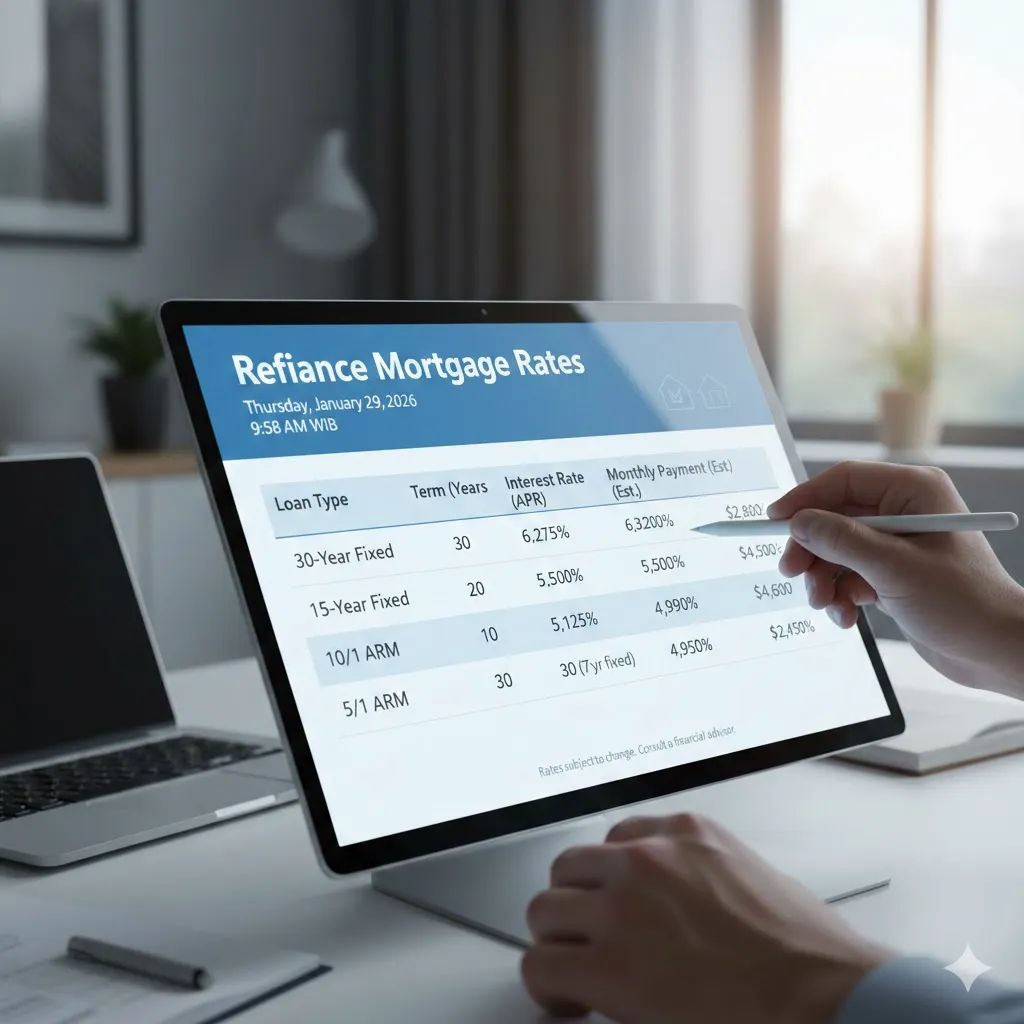
A clear guide to refinance mortgage rates today, how they’re determined, and smart ways to decide if refinancing makes sense for you.
Refinance mortgage rate today is a number that could save—or cost—you thousands of dollars over the life of a loan. Whether you’re refinancing to lower your monthly payment, shorten your term, or pull out cash, understanding current rates and how they work helps you make calm, confident decisions in 2026.
Rather than chasing the lowest advertised rate you see on a banner ad, today’s refinance rates should be considered in context: your credit, loan type, timing, and long-term goals.
What “Refinance Mortgage Rate Today” Really Means
A refinance mortgage rate is the interest percentage lenders offer borrowers when replacing an existing mortgage with a new one. This new rate influences your monthly payments and total interest paid forever after.
Today’s refinance rates are shaped by broader economic conditions like Federal Reserve policy, bond markets, and inflation expectations—but your personal rate will also reflect your credit score, loan size, and financial profile.

For example, even if the “headline rate” posted online is 6.5%, your actual offered rate might be 6.1% or 6.9% depending on your individual situation.
Why Checking Today’s Refinance Rates Matters
Refinancing can mean different things for different homeowners:
- Lower monthly payments
- Shorter loan term
- Switching from adjustable rate to fixed rate
- Accessing home equity as cash-out
Knowing the current refinance mortgage rate today helps you decide if now is the right moment to move.
However, rate alone shouldn’t be the only focus—loan costs, closing fees, and your timeline matter too.
How Refinance Rates Are Determined
Refinance rates reflect broader financial forces and individual factors.
Market Influences
Rates track trends in the bond market, inflation, and economic data. When investors demand higher yields, mortgage rates often rise too.
Personal Factors
Lenders assess your:
- Credit history
- Debt-to-income ratio
- Loan-to-value ratio
- Property type
Strong personal criteria can get you a rate significantly better than average.
Refinance Mortgage Rate Today vs Your Current Rate
| Question to Ask | What It Means | Why It Matters |
|---|---|---|
| Is today’s rate lower than mine? | Potential savings or new strategy | Reduces lifetime interest |
| Am I keeping the home long term? | Time frame matters | Determines payoff of refi costs |
| Do I want lower payments or cash out? | Different goals need different terms | Helps tailor loan type |
This table helps you connect rates to choices—not just numbers.
Should You Refinance Now?
Not every dip in refinance mortgage rate today means “yes.” A common rule of thumb: consider refinancing if rates are 0.75%–1% below your current rate and you plan to stay in the home long enough to recover closing costs.
If you refinance for shorter-term goals (like moving soon), the long-term savings may not materialize.
Disclaimer
This article is for informational purposes only and does not constitute financial or mortgage advice. Actual rates and eligibility vary by lender and individual circumstances.
Pro Insight
Locking a rate early in the process—once you know the direction you want to go—can protect you if market conditions shift during your application.
Quick Tip
Check your loan estimate before committing. This document breaks down not just your rate but total closing costs.
Common Misunderstandings About Refinance Rates
One common misconception is that the lowest published refinance rate is the one you’ll receive. In reality, advertised rates are starting points; your personal rate is influenced by your profile and lender criteria.
Another misunderstanding is that refinancing always saves money. If you refinance into a longer term without a significantly lower rate, you may end up paying more interest over time—even if monthly payments drop.
FAQs About Refinance Mortgage Rates
Are refinance mortgage rates the same as purchase mortgage rates?
They’re often close but may differ slightly because lenders price refinance loans differently.
Do credit scores really matter?
Yes. Higher scores typically qualify for lower rates.
Can refinancing shorten my loan term?
Yes. Many homeowners refinance into shorter terms to pay off faster.
Do refinance rates change every day?
Yes. They can shift daily based on market conditions and lender pricing decisions.
Should I refinance if rates are only slightly lower?
Not always—calculate total costs before deciding.
Conclusion
Today’s refinance mortgage rate is more than a number—it’s a tool for measuring opportunity. By understanding how rates are determined and how they compare to your current loan, you can make smarter, more confident decisions about whether refinancing fits your goals in 2026.
Use today’s numbers as one piece of a broader financial decision rather than a standalone signal.
U.S. Trusted Resources
- Freddie Mac – Primary Mortgage Market Survey
https://www.freddiemac.com/pmms - Consumer Financial Protection Bureau – Refinancing Guide
https://www.consumerfinance.gov - Federal Housing Finance Agency – Mortgage Data
https://www.fhfa.gov - U.S. Department of Housing and Urban Development – Mortgage Assistance
https://www.hud.gov
About the Author