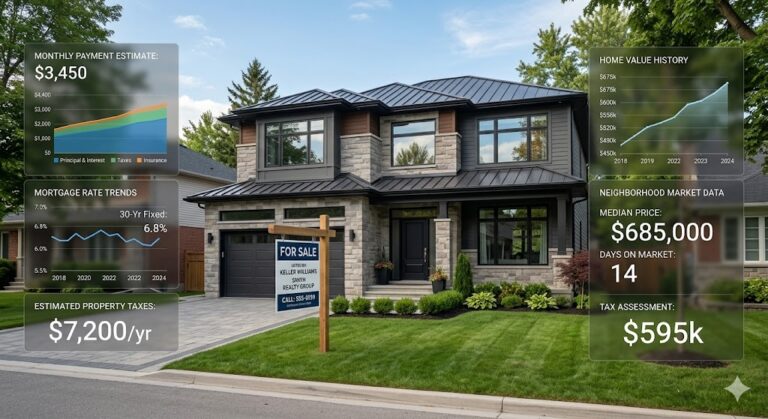
When buying a home, many people focus on the mortgage alone—but property taxes are just as important in determining your true monthly cost. In the U.S., these two expenses are often combined into a single payment, which can make budgeting simpler but also less transparent if you’re not familiar with how it works.
Understanding how property tax and mortgage payment interact helps you avoid surprises and plan more accurately.
What Makes Up a Mortgage Payment
A typical monthly mortgage payment is more than just the loan itself. It usually includes four main components:
- Principal: The amount you repay toward the loan balance
- Interest: The cost of borrowing money
- Property taxes: Local taxes based on your home’s value
- Insurance: Homeowners insurance (and sometimes mortgage insurance)
This combined payment is often referred to as PITI—principal, interest, taxes, and insurance.
How Property Taxes Are Included
Most lenders collect property taxes as part of your monthly payment through an escrow account.
Here’s how it works:
- Your lender estimates your annual property tax
- That amount is divided into 12 monthly portions
- You pay it along with your mortgage
- The lender pays the tax bill on your behalf when due
This setup ensures taxes are paid on time, but it also means your monthly payment can change.
Property Tax vs Mortgage Cost Breakdown
Understanding the difference between these two costs is essential.
| Feature | Property Tax | Mortgage Payment (Principal & Interest) |
|---|---|---|
| Who sets it | Local government | Lender agreement |
| Changes over time | Yes, based on home value and rates | Fixed (for fixed-rate loans) |
| Tax deductible | Often, within limits | Interest may be deductible |
| Payment method | Usually escrowed monthly | Monthly payment |
| Predictability | Variable | More stable |
A homeowner in Texas or New Jersey, for example, may pay significantly higher property taxes than someone in other states—even with a similar home price.
Why Property Taxes Can Change Your Payment
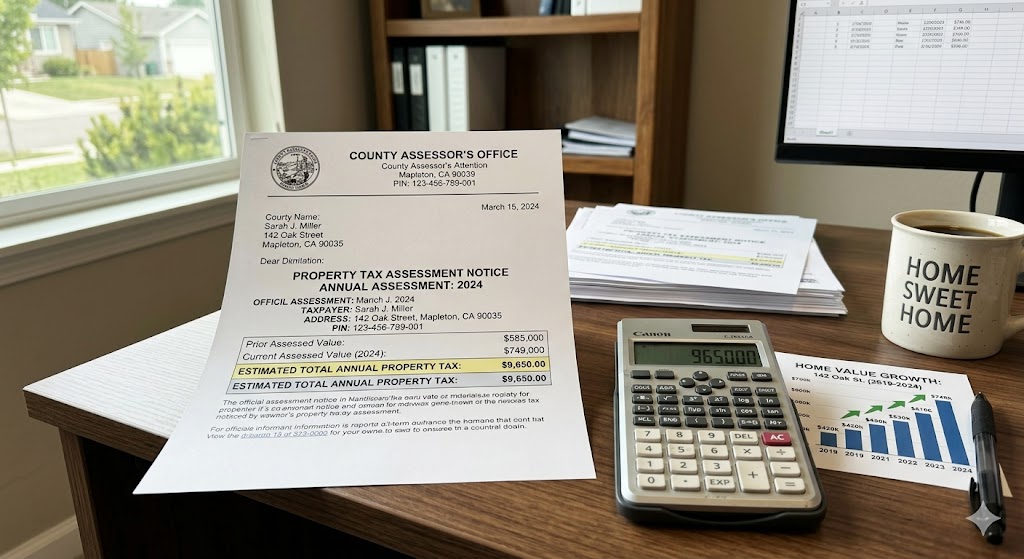
Unlike fixed mortgage rates, property taxes can increase over time.
Common reasons include:
- Rising home values
- Local tax rate changes
- New public budgets or levies
If your property tax increases, your lender will adjust your escrow payment. That means your monthly mortgage bill can go up—even if your loan terms stay the same.
A simple scenario:
A homeowner pays $300/month in property taxes. After reassessment, taxes increase to $400/month. Their total monthly payment rises by $100, even though their mortgage rate hasn’t changed.
Pro Insight
Escrow shortages can catch homeowners off guard. If your lender underestimates taxes, you may face a one-time catch-up payment or higher monthly costs the following year.
How to Estimate Your Total Monthly Payment
To estimate your full housing cost, include both mortgage and property tax.
A simplified formula looks like this:
Monthly\ Payment = \frac{Loan\ Amount \times Interest}{12} + \frac{Annual\ Property\ Tax}{12}
This doesn’t include insurance, but it gives a useful baseline.
For example:
- Loan payment: $1,500/month
- Property tax: $6,000/year → $500/month
Total estimated payment: $2,000/month (before insurance)
Quick Tip
When shopping for homes, always check the property tax rate in that area—not just the home price. Two similar homes can have very different monthly costs due to taxes alone.
Common Mistakes to Avoid
- Ignoring property taxes when budgeting
- Assuming your monthly payment will stay fixed forever
- Not reviewing escrow statements annually
- Underestimating tax increases in fast-growing areas
These mistakes can lead to unexpected financial strain over time.
Frequently Asked Questions

Are property taxes included in every mortgage payment
Often yes, if your lender uses an escrow account, but not all loans require it.
Can property taxes increase every year
Yes, depending on local assessments and tax rates.
What happens if property taxes go up
Your monthly mortgage payment typically increases to cover the difference.
Can I pay property taxes separately
Sometimes, especially if you opt out of escrow and meet lender requirements.
How much are property taxes in the U.S.
They vary widely by state and county, often ranging from about 0.5% to over 2% of home value annually.
Conclusion
Property tax and mortgage payment are closely linked, even though they come from different sources. While your mortgage may stay predictable, property taxes can shift over time and directly affect your monthly costs.
By understanding how these components work together—and planning for potential changes—you can make more informed decisions and avoid surprises as a homeowner.
Trusted U.S. Resources
https://www.consumerfinance.gov
https://www.irs.gov
https://www.hud.gov
https://www.usa.gov
This article is for general informational purposes only and does not provide legal, financial, medical, or professional advice. Policies, rates, and regulations may change over time.
About the Author