
Online personal loans are a fast and flexible way to access funds without stepping into a bank branch. In 2026, digital lenders have streamlined applications, faster approvals, and competitive rate options—but convenience can mask complexity. Borrowers who understand how online personal loans work make better choices and avoid costly surprises.
This guide focuses on real-world decisions, not hype.
This article is for general informational purposes only and does not provide financial, legal, or lending advice. Loan terms, rates, and availability vary by lender, credit profile, and state regulations.
Why online personal loans are so popular
Online personal loans save time and expand choice. A busy professional in Texas recently used an online lender to consolidate high-interest credit card debt. What would have taken weeks in person took minutes online—without interrupting her schedule.
But speed doesn’t eliminate risk. Knowing how lenders assess you and what terms really mean keeps borrowing strategic and cost-effective.
What online personal loans typically cover
These loans are generally unsecured and versatile. Common uses include:
- debt consolidation
- unexpected expenses
- home improvement
- medical bills
- travel financing
Because they are unsecured, rates depend heavily on your credit profile, income stability, and debt levels.
If your site already covers credit score influences, linking internally here adds context without overwhelming readers.
Typical interest rates you might see
Interest rates vary widely based on creditworthiness and lender type. In 2026, typical APR ranges include:
| Credit Tier | Approx. APR Range |
|---|---|
| Excellent (740+) | ~8%–15% |
| Good (670–739) | ~12%–20% |
| Fair (620–669) | ~18%–30% |
| Poor (<620) | 25%+ |
Unsecured online loans price risk rather than collateral, so stronger profiles access lower rates.
How to compare online lenders
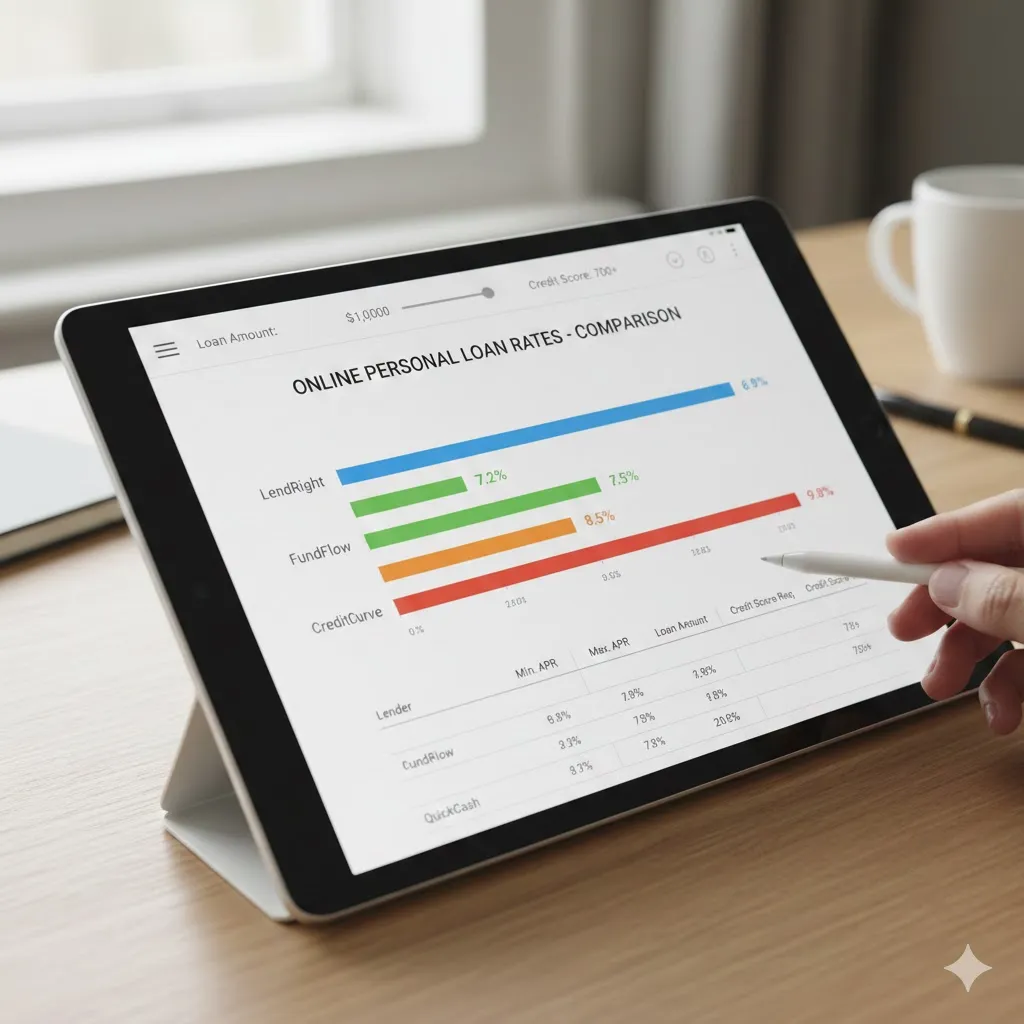
Not all online lenders offer the same value. When comparing options, consider:
- APR and fees – Origination, late, and prepayment fees
- Loan terms – Shorter terms cost less over time
- Prequalification – Soft checks that don’t hurt your score
- Customer support – Real help when questions arise
A borrower in Florida used prequalification tools from several lenders before applying, saving nearly 4 percentage points in APR.
Pro Insight
Prequalification isn’t a promise—but it predicts your likely rate range without impacting your credit score. Use it to shop smarter before committing.
Quick Tip
If your initial rate offer seems high, ask the lender if they match competitors’ lower offers. Some online lenders adjust pricing to stay competitive.

Application mistakes that cost money
Simple errors can inflate your cost:
- applying with maxed-out credit utilization
- submitting incomplete income documentation
- ignoring fees hidden in fine print
- choosing terms that extend cost without lowering monthly strain
A consultant in Ohio improved her loan terms simply by paying down a high-utilization card before applying online.
FAQs
Can I get an online personal loan with bad credit?
Yes, but expect higher rates or limited options.
Does applying hurt my credit score?
Hard inquiries can slightly impact your score, but prequalification uses soft checks that don’t.
Are online personal loan rates fixed?
Many are fixed, providing predictable monthly payments.
How fast can I get approved?
Some lenders offer same-day or next-day funding after approval.
Should I choose a longer term to lower monthly payments?
Longer terms reduce monthly cost but increase total interest paid over time.
Conclusion
Online personal loans offer speed and flexibility—but smart borrowing depends on understanding how lenders price risk and what terms work best for your situation. Use prequalification tools, compare offers, and read terms carefully. Borrowing with clarity helps you pay less and worry less.
Trusted U.S. Resources
- Consumer Financial Protection Bureau (CFPB): https://www.consumerfinance.gov
- Federal Trade Commission (FTC) on Loans: https://www.ftc.gov
- Federal Reserve Consumer Guides: https://www.federalreserve.gov
About the Author