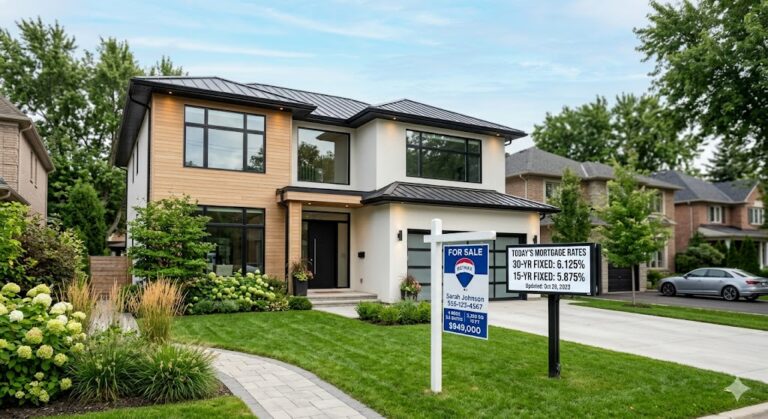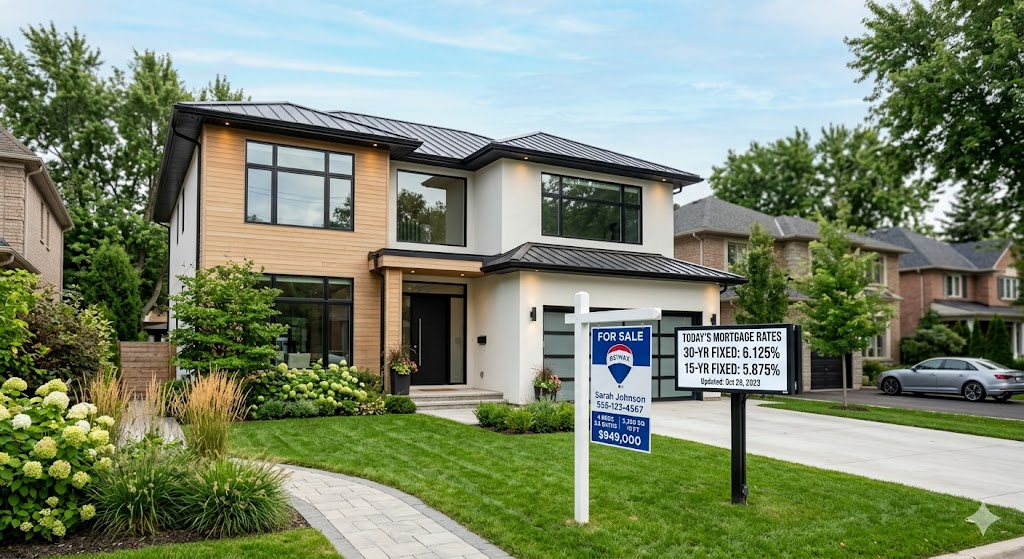
Mortgage rate trends in the United States have shifted significantly over the past few years, moving from historic lows to more normalized levels. For buyers, homeowners, and investors, understanding these trends helps put current rates—and future expectations—into perspective.
Current Mortgage Rates in the U.S.
As of early 2026, mortgage rates have stabilized in a relatively narrow range:
- 30-year fixed mortgage: ~6.0% to 6.4%
- 15-year fixed mortgage: ~5.4% to 5.6%
Recent weekly data shows rates hovering around 6.0%–6.1%, with short-term fluctuations slightly above that range.
Compared to a year earlier, rates are modestly lower (around 6.7% in 2025), suggesting a gradual cooling trend rather than a sharp decline.
How Mortgage Rates Have Changed Over Time
Mortgage rates follow long economic cycles, and today’s levels make more sense when viewed historically.
- 1981 peak: Over 16%
- Long-term average (since 1971): ~7.7%
- 2021 low: ~2.65%
- 2025 average: ~6.66%
- 2026 current: ~6.0%–6.1%
This shows an important pattern:
Today’s rates are higher than recent lows—but still close to historical norms.
Mortgage Rate Trends Then vs Now
| Period | Average 30-Year Rate | Market Context |
|---|---|---|
| 1980s | 10%–16%+ | High inflation era |
| 2000–2019 | 4%–7% | Stable growth period |
| 2020–2021 | ~2.5%–3% | Pandemic stimulus |
| 2022–2023 | 6%–7%+ | Inflation surge |
| 2025–2026 | ~6% | Stabilization phase |
Pro Insight
Many buyers still compare today’s rates to the unusually low levels from 2020–2021.
But those rates were driven by emergency economic policies and are not typical in the long run.
From a historical perspective, a 6% mortgage rate is closer to normal than exceptional—which is why expectations have shifted across the housing market.
What Is Driving Mortgage Rate Trends

Mortgage rates are influenced by several key economic factors:
1. Inflation
Higher inflation usually leads to higher mortgage rates because lenders demand better returns.
2. 10-Year Treasury Yield
Mortgage rates closely track this benchmark rather than directly following central bank rates.
3. Federal Reserve Policy
Rate hikes or cuts influence borrowing costs indirectly through financial markets.
4. Economic Growth
Strong economic activity can push rates upward, while slowdowns may ease them.
These forces often move together, which is why rates don’t change randomly.
Quick Tip
If you’re watching mortgage rates, pay attention to Treasury yields and inflation reports. These often signal where rates are heading before lenders adjust them.
Recent Trend Direction
Over the past year, the trend has been:
- 2024–early 2025: Rates peaked above 7%
- Late 2025: Gradual decline toward mid-6% range
- 2026: Stabilizing around ~6% with small fluctuations
Short-term volatility still occurs, with brief spikes above 6.3%–6.4% depending on market conditions.
Overall, the trend is sideways with mild downward pressure, not a rapid drop.
Outlook for Mortgage Rates

Forecasts suggest moderate stability rather than dramatic change.
- Expected range for 2026: around 6%–6.2%
- Some projections: rates may remain above 6% through 2026
Key takeaway:
- Large drops are unlikely without major economic shifts
- Rates may move gradually based on inflation and economic data
Frequently Asked Questions
Are mortgage rates going down in 2026
They have eased slightly from 2025 highs but are mostly stabilizing around 6%.
Why are mortgage rates still high compared to 2021
Rates in 2021 were unusually low due to emergency economic policies during the pandemic.
What is considered a normal mortgage rate
Historically, around 6%–8% has been common over the long term.
What affects mortgage rates the most
Inflation, Treasury yields, and overall economic conditions are key drivers.
Should I wait for rates to drop
That depends on your situation. Rates may not fall significantly in the near term.
Conclusion
Mortgage rate trends in the U.S. reflect a shift from historically low levels back toward long-term averages. While today’s rates may feel high compared to recent years, they are relatively typical in a broader historical context.
Rather than expecting sharp declines, most forecasts point toward gradual movement and stability. For borrowers, that means decisions are increasingly based on timing, affordability, and personal goals—not just waiting for lower rates.
Trusted U.S. Resources
https://www.freddiemac.com
https://www.federalreserve.gov
https://www.hud.gov
https://www.consumerfinance.gov
This article is for general informational purposes only and does not provide legal, financial, medical, or professional advice. Policies, rates, and regulations may change over time.
About the Author