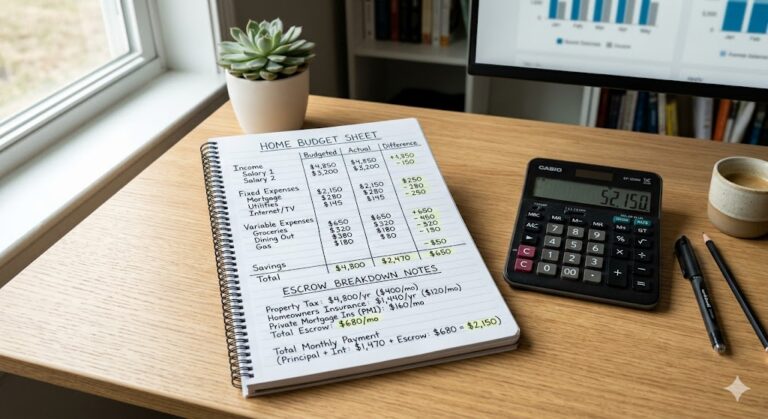
Mortgage insurance PMI is a common part of buying a home with a smaller down payment. While it adds to your monthly costs, it can also make homeownership possible sooner by reducing the upfront cash required.
For many buyers, especially first-time homeowners, understanding how PMI works can help avoid unnecessary costs and plan smarter over time.
What Is Mortgage Insurance PMI

Private mortgage insurance (PMI) is a type of coverage that protects the lender—not the borrower—if the borrower stops making payments.
PMI is typically required when:
- Your down payment is less than 20%
- You have a conventional loan
- The lender considers the loan higher risk
Although it doesn’t directly protect you, PMI allows lenders to offer loans with lower upfront requirements.
How PMI Works in Real Life
PMI is usually added to your monthly mortgage payment, though some lenders offer upfront or split-payment options.
The cost depends on several factors:
- Loan amount
- Credit score
- Down payment size
- Property type
Real-world micro scenario
A buyer purchases a $300,000 home with a 10% down payment. Because the down payment is below 20%, PMI is required. This might add around $100–$200 per month to the mortgage payment, depending on credit and loan terms.
Over time, as equity increases, PMI can be removed.
PMI Cost Comparison

| Down Payment | Typical PMI Cost | Impact on Monthly Payment |
|---|---|---|
| 5% | Higher | Noticeable increase |
| 10% | Moderate | Manageable addition |
| 15% | Lower | Smaller impact |
| 20%+ | None | No PMI required |
Even a small increase in down payment can reduce PMI costs significantly.
Pro Insight
PMI isn’t always a negative. In many cases, paying PMI allows buyers to enter the market earlier, potentially benefiting from home value growth. The key is balancing upfront savings with long-term monthly costs.
When PMI Can Be Removed
One of the most important aspects of PMI is that it doesn’t have to last forever.
You can typically remove PMI when:
- Your loan balance reaches 80% of the home’s original value (by request)
- It automatically ends at 78% loan-to-value
- You refinance into a new loan without PMI
- Your home value increases significantly (with appraisal)
Tracking your equity can help you remove PMI sooner than expected.
Quick Tip
Make extra payments toward your principal when possible. Even small additional payments can help you reach the 80% loan-to-value threshold faster and eliminate PMI earlier.
Alternatives to PMI
Some buyers explore other options instead of traditional PMI.
Piggyback loans
A second loan helps cover part of the down payment to avoid PMI.
Lender-paid mortgage insurance
The lender covers PMI in exchange for a higher interest rate.
Government-backed loans
Certain loan programs may not require PMI but include different types of insurance.
Each option comes with trade-offs, especially in long-term cost.
Common Mistakes to Avoid
Many borrowers misunderstand how PMI works.
Assuming PMI lasts forever
It can often be removed once sufficient equity is built.
Not requesting early removal
Lenders don’t always cancel PMI automatically at 80%.
Focusing only on monthly payment
Total cost over time matters more than short-term affordability.
Skipping comparison between lenders
PMI rates can vary significantly.
Frequently Asked Questions
What does PMI stand for in a mortgage?
PMI stands for private mortgage insurance, which protects the lender if the borrower defaults.
How much does PMI usually cost?
It typically ranges from about 0.3% to 1.5% of the original loan amount per year, depending on risk factors.
Can PMI be avoided completely?
Yes, usually by making a 20% down payment or using alternative loan structures.
Is PMI tax deductible?
It depends on current tax laws and income limits, which can change over time.
How do I remove PMI from my loan?
You can request removal once your loan reaches 80% of the home’s value or wait for automatic termination at 78%.
Conclusion
Mortgage insurance PMI plays a practical role in helping buyers access home financing with lower upfront costs. While it increases monthly payments, it also creates opportunities for earlier homeownership.
Understanding how PMI works—and how to remove it—can help you manage costs more effectively and build equity with greater confidence.
Trusted U.S. Resources
https://www.consumerfinance.gov
https://www.hud.gov
https://www.fanniemae.com
https://www.freddiemac.com
This article is for general informational purposes only and does not provide legal, financial, medical, or professional advice. Policies, rates, and regulations may change over time.
About the Author