Understand low down payment mortgage options in the USA for 2026 with clear examples, how much you really need, and smart ways to qualify without overpaying.
Buying a home feels exciting—but saving for a large down payment can feel like climbing a mountain. That’s where low down payment mortgages come in. These loan programs help buyers enter the market sooner with less cash upfront, while still keeping long-term costs manageable.
For example, a couple in Ohio found a home they loved. Instead of waiting years to save 20% down, they used a low down payment loan and moved in within months—without trapping themselves in expensive insurance costs later.
What a Low Down Payment Mortgage Really Means
A low down payment mortgage lets you buy a home with less cash upfront. Instead of saving 20% of the purchase price, you might put down as little as 3% or even 0% with certain programs.
However, lower down payments usually involve additional costs or requirements. Still, they can be a smart tool when used correctly—and not seen as “free money.”
If you’re just beginning the journey, pairing this with a mortgage pre-approval guide helps you plan how much you need before house hunting.
Common Low Down Payment Mortgage Options in the USA
Here are the loans that most buyers use when saving for a big down payment feels too hard:
| Loan Type | Typical Down Payment | Who It Helps |
|---|---|---|
| Conventional | 3% | Buyers with decent credit |
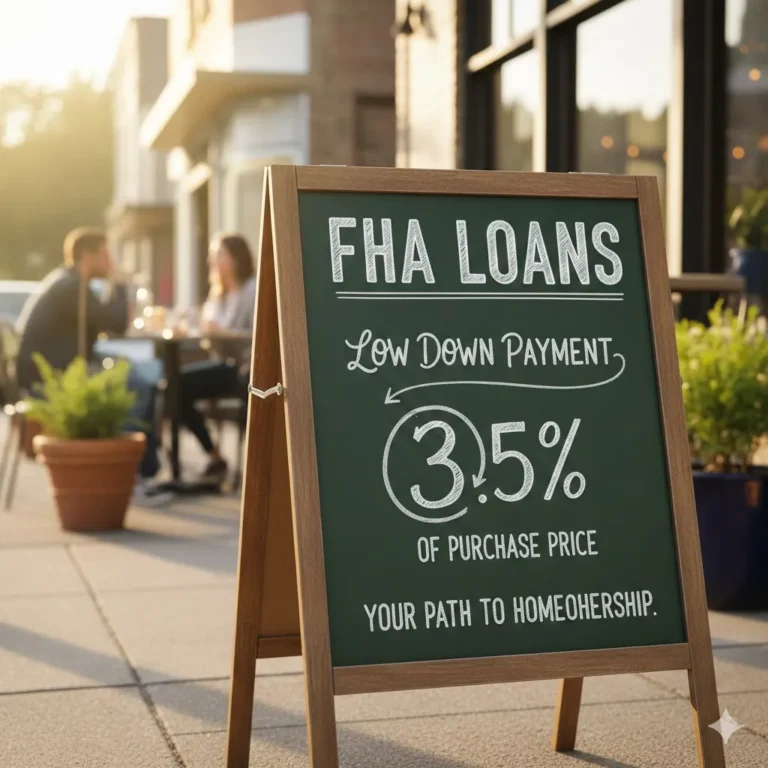
| FHA Loan | 3.5% | Buyers with lower credit scores |
| VA Loan | 0% | Veterans & service members |
| USDA Loan | 0% | Buyers in eligible rural/suburban areas |
This table shows your options at a glance. Different loans serve different situations, but all can help reduce upfront cash needs.
How Down Payment Affects Your Monthly Cost
A low down payment doesn’t just affect closing day. It can influence your monthly payment in two main ways:
1. Mortgage Insurance
Many low down payment loans require mortgage insurance. This protects the lender, not you—but you’re the one paying for it.
For FHA loans, mortgage insurance may continue for the life of the loan unless you refinance later. For conventional loans, you can often remove mortgage insurance once you reach enough equity.
2. Interest Rates
Sometimes lenders charge slightly higher rates on low down payment loans. Still, the cost can be worth it for the ability to buy sooner.
Understanding these differences helps you match the loan to your budget before you apply.
Qualification Basics for Low Down Payment Mortgages
Even with low down payment options, lenders still want to see responsible finances.
Income Stability
Lenders check job history and income to make sure you can repay the loan. Long gaps or inconsistent income may require extra documentation.
Credit Score
Higher credit scores often mean better rates. Many lenders provide low down payment options with scores in the mid-600s, though stronger credit still helps.
Debt-to-Income Ratio (DTI)
Lenders compare your monthly debts to your income. Lower DTI typically improves approval odds.
If you want to see how lenders judge your profile, reading a home loan requirements guide can make the process clearer.

Real-World Example
Case:
Alex and Sam want a $300,000 home but don’t have a big down payment. Here’s how they made it work:
- They chose a conventional loan with 3% down.
- Their credit scores were solid.
- They budgeted for mortgage insurance temporarily.
- They got pre-approved before bidding.
Because they understood the costs ahead of time, their monthly payment felt manageable—even with mortgage insurance.
Pro Insight
Many buyers choose a 3% conventional loan first, then refinance later into a lower payment once they build equity and improve credit. It’s a practical way to reduce both mortgage insurance and overall cost over time.
How to Choose the Right Low Down Payment Mortgage
Here’s how to think about your choice:
Match Loan Type to Your Situation
- FHA: More flexible credit, slightly higher insurance
- Conventional 3%: Best if credit is solid
- VA/USDA: No down payment if eligible
Budget for Upfront and Ongoing Costs
Make sure you consider:
- down payment
- closing costs
- mortgage insurance
- monthly payment comfort
Get Multiple Quotes
Different lenders price similar loans differently. Comparing quotes helps you avoid surprises.
If you’re unsure, a mortgage rate comparison guide can make those differences clearer.
Common Mistakes With Low Down Payment Mortgages
Waiting Too Long to Apply
Some buyers delay getting a pre-approval. That can cost them homes in competitive markets.
Ignoring Mortgage Insurance Costs
Low down payment loans often include mortgage insurance, and forgetting this skips a major monthly cost.
Not Comparing Lenders
Your neighbor’s lender isn’t automatically the best option. Shopping around always pays off.
If budgeting feels tight, a home budget planning guide can help you balance priorities.
Quick Tip
Always ask lenders how and when mortgage insurance can be removed. This affects long-term costs even if your down payment is low.
FAQs About Low Down Payment Mortgages
Can I buy a home with 0% down?
Yes, through programs like VA or USDA—if you qualify.
Do low down payment loans cost more?
They often involve mortgage insurance and possibly slightly higher rates, but they still make homeownership accessible sooner.
Will a low down payment hurt my chances of approval?
Not if your finances are solid. Lenders focus on your overall profile, not just down payment size.
Can I refinance later to remove mortgage insurance?
Often yes, once you build enough equity and have good credit.
Is 3% down available for first-time buyers only?
No. Many conventional programs offer 3% down to qualified buyers regardless of experience.
Disclaimer
This article is for general informational purposes only and does not provide financial, legal, or lending advice. Loan terms and eligibility vary by lender and borrower circumstances.
Trusted U.S. Sources
- https://www.consumerfinance.gov/owning-a-home/
- https://www.hud.gov/buying
- https://www.fanniemae.com/education
- https://www.freddiemac.com/learn
About the Author