
Installment loan USA options are among the most common ways Americans borrow money for planned expenses, emergencies, or debt consolidation. Unlike payday or revolving credit, installment loans provide fixed payment schedules over set terms—making budgeting easier when done right.
In 2026, digital lenders, credit unions, and banks offer competitive installment products, but pricing and terms vary widely. Understanding how they work helps you borrow with confidence instead of confusion.
This article is for general informational purposes only and does not provide financial, legal, or lending advice. Loan availability and terms vary by lender, credit profile, and state regulations.
What an installment loan actually is
An installment loan is money borrowed under an agreement to repay in regular payments—usually monthly—over a defined period. These payments cover both principal and interest.
Common uses include:
- debt consolidation
- major purchases
- unexpected expenses
- home improvements
- auto repairs
The key difference from credit cards is fixed payments and fixed term length, which promotes predictable budgeting.
Installment loan terms and repayment
Installment loans usually range from a few months to several years.
Typical term lengths:
- Short-term: 6–24 months
- Medium-term: 2–5 years
- Long-term: 5+ years
Each term affects how much interest you pay overall. Shorter terms reduce total interest but increase monthly payments. Longer terms lower monthly costs but raise total interest.
If your site already covers budgeting or debt management tips, internal linking here adds context.
Interest rates in the U.S.
Interest rates depend on creditworthiness, loan size, and lender type.
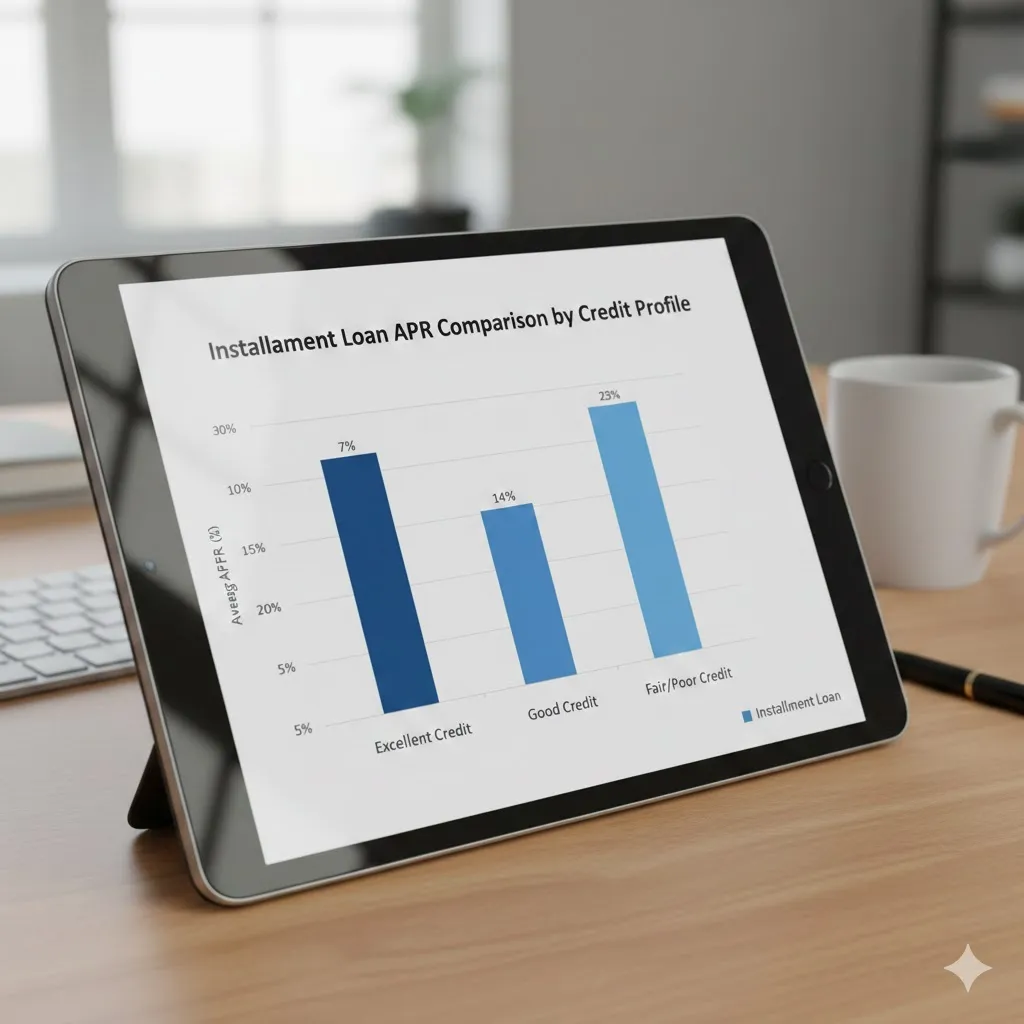
In 2026, a wide range of APRs exist for U.S. installment loans:
| Profile | Approx. APR Range | Notes |
|---|---|---|
| Excellent credit | ~8%–15% | Best pricing |
| Good credit | ~12%–20% | Most common |
| Fair credit | ~18%–30% | Higher cost |
| Poor credit | 20%+ | Limited options, higher risk pricing |
Your actual rate varies by lender, term, and market conditions.
Comparing lender types
Not all installment loan providers work the same. This table highlights core differences.
| Lender Type | Typical APR | Best For | Notes |
|---|---|---|---|
| Online banks | ~8%–25% | Fast approvals | Competitive rates |
| Credit unions | ~7%–18% | Member benefits | Often lower costs |
| Traditional banks | ~10%–22% | Established customers | Branch support |
| Marketplace lenders | ~8%–30% | Wide comparisons | Variable pricing |
How to qualify for better terms
Installment loan pricing rewards stronger profiles.
- Maintain strong credit scores
- Keep debt-to-income ratio low
- Provide stable income documentation
- Consider a co-signer with solid credit
Even small improvements can move you into a lower APR tier.
Pro Insight
Prequalification is your friend. Most lenders offer soft credit checks that show potential rates without affecting your credit score. Use these tools to compare before committing.
Quick Tip
Before applying, calculate your total repayment (principal + interest). A loan with lower monthly payments but much longer terms can cost significantly more.

Risks to consider
Installment loans are structured, but risks remain.
- High APRs: Especially with shorter credit history or lower scores
- Prepayment penalties: Some lenders charge for early payoff
- Fees: Origination or late payment fees can add up
- Overborrowing: Borrow only what you need and can repay
Responsible borrowing protects both your budget and credit profile.
FAQs
What’s an installment loan?
A fixed-term loan repaid in scheduled payments that include principal and interest.
Are installment loans better than credit cards?
They offer predictable payments and fixed timelines. Credit cards have revolving balances and variable costs.
Can you pay off an installment loan early?
Often yes, but check for prepayment penalties.
Do installment loans affect your credit score?
Yes. On-time payments can help, while late payments can hurt.
Can I get an installment loan with bad credit?
Yes, but expect higher interest and fewer options.
Conclusion
Installment loan USA options offer predictable repayment and structured budgeting when used wisely. By comparing lenders, understanding terms, and preparing your profile, you can secure a loan that fits both your needs and your long-term financial goals.
Trusted U.S. Resources
- Consumer Financial Protection Bureau (CFPB): https://www.consumerfinance.gov
- Federal Trade Commission (FTC) on Loans: https://www.ftc.gov
- Federal Reserve Consumer Guides: https://www.federalreserve.gov
About the Author