
Employee loans have become an essential safety net for workers across the U.S., especially as unexpected expenses—from medical bills to car repairs—continue to rise. In 2025, the landscape has matured with clearer regulations, more employer-sponsored programs, and expanded fintech options. Still, borrowers often face confusing terms, hidden fees, or misleading ads that promise “instant approval.” Reality works differently. Approval depends on employment stability, credit history, debt-to-income ratio, and even bank account habits.
This guide breaks down employee loans the way an experienced HR manager or financial advisor might explain them during a quiet lunch break—practical, digestible, and focused on real savings.
Why Employee Loans Matter in 2025
For many U.S. workers, an employee loan can bridge the gap between financial stress and stability. As of 2025, personal loan rates average around 12% nationwide, but employee loan programs often fall between 7–10%, especially for borrowers with stable income and clean recent payment history.
However, not every employee loan is equally beneficial. Some come with minimal fees, while others bury costs in fine print. Understanding these differences can easily save a borrower hundreds of dollars over the life of the loan.
What Lenders Evaluate for Employee Loan Approval
- Employment stability (typically 3–6 months minimum)
- W-2 vs. 1099 status
- Debt-to-income ratio (DTI under 36–43% preferred)
- Credit score and recent delinquencies
- Bank account patterns (overdraft frequency)
- Ability to automate payments
A surprisingly common rejection factor is a delinquency within the past 60 days, even for workers with otherwise strong income.
Pro Insight
Underwriters in 2025 weigh employment stability more heavily than they did five years ago. Internal risk models show borrowers who recently changed jobs have nearly double the early-delinquency rate compared to long-term employees. This is why even a high-credit borrower might receive a slightly elevated APR shortly after switching employers.
Types of Employee Loans in the U.S.
1) Standard Personal Loan
These are offered by banks and online lenders. They’re quick and flexible but sensitive to credit score bands. For workers in the Fair to Good credit range (630–720), personal loans often provide the best balance of approval speed and predictability.
2) Employer-Sponsored Employee Loan
Some companies now offer low-interest or even zero-interest loans as part of employee wellness programs. Repayments are deducted directly from payroll, reducing delinquency risk. However, borrowers may be required to repay the entire balance immediately if they resign—a critical detail many overlook.
3) Payroll-Deduction Loans
These loans integrate repayment into the employer’s payroll system. Approval tends to be easier, but certain lenders include fees that inflate the true APR.
Did You Know?
Research cited by the Consumer Financial Protection Bureau shows payroll-deduction loans have 27% lower delinquency rates than traditional personal loans. Still, the automatic nature of repayment can mask overspending, so borrowers should track their cash flow closely.

The True Cost of an Employee Loan: Look Beyond APR
Borrowers should review all associated fees before deciding:
- Origination fees (1–8%)
- Late payment fees
- Automated withdrawal failure fees
- Early payoff penalties (less common, but still found in some fintech lenders)
A loan with a slightly lower APR but higher origination fees can ultimately cost more.
State-by-State Differences That Matter
U.S. loan regulations vary widely:
- California – Strong protections, strict limits on excessive fees
- Texas – Higher APR ceilings, more flexibility for lenders
- New York – Aggressive enforcement against high-cost products
Borrowers should always confirm loan rules applicable to their residential state.
Authority sources: consumerfinance.gov / ftc.gov
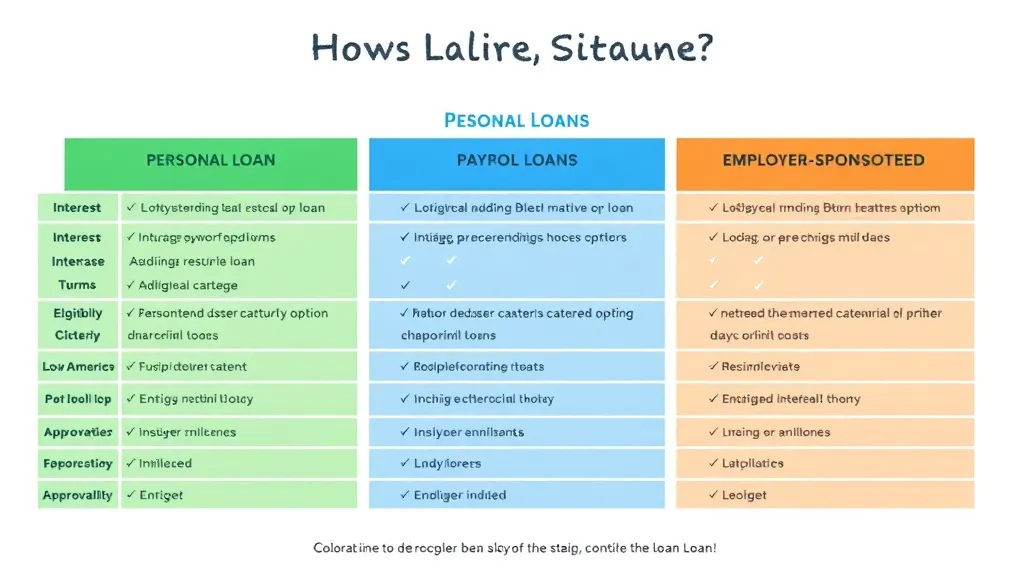
Employee Loan Comparison Table (2025)
| Feature | Benefit | Cost | Notes |
|---|---|---|---|
| Standard Personal Loan | Fast approval, transparent terms | APR 7–24% | Best for strong credit profiles |
| Employer-Sponsored Loan | Low or zero interest | Minimal fees | Immediate payoff required if job ends |
| Payroll-Deduction Loan | Easy approval, automated payments | Possible added fees | Must review fine print |
| Fintech Online Loan | Convenient digital process | Wide APR range | Income verification required |
| Credit Union Loan | Community-driven low rates | Membership required | Highly stable and trusted |
Frequently Asked Questions (FAQ)
1) How long does employee loan approval take?
Most lenders provide decisions within 24–72 hours. Employer programs can be quicker because verification happens internally. Complex applications involving credit issues may require additional documentation.
2) Can I get an employee loan with low credit?
Yes. Many lenders weigh employment stability heavily, so Fair-credit borrowers often qualify. However, the APR may be higher compared to high-credit applicants.
3) What happens to an employer-sponsored loan if I switch jobs?
Most programs require immediate repayment upon resignation or termination. Some employers deduct the remaining amount from your final paycheck.
4) Are employee loans better than personal loans?
Employer-sponsored loans are typically the cheapest option. But they may restrict usage or impose job-related conditions. Personal loans offer more freedom but depend heavily on credit score.
5) What should I prepare before applying?
Prepare your last three pay stubs, employment verification, and recent bank statements. Reviewing your credit report for errors can also improve approval odds and reduce your APR.
About the Author