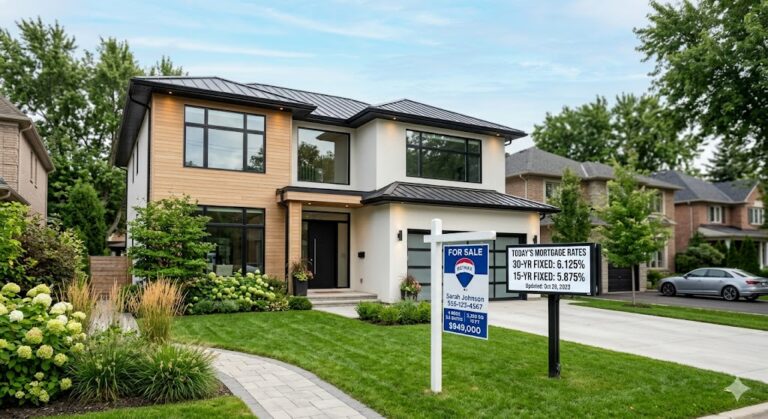
Buying your first home is a major step, and choosing the best mortgage for first house financing can shape your long-term financial comfort. With several loan types available, the “best” option depends less on trends and more on your credit profile, savings, and income stability.
Most Common Mortgage Options for First-Time Buyers

First-time buyers in the U.S. typically choose from a few well-established mortgage types. Each is designed for a different financial situation.
Conventional loans
These are the most widely used mortgages. Some programs allow as little as 3% down, but they usually require stronger credit (around 620 or higher).
FHA loans
Backed by the government, these loans are known for flexibility. You may qualify with a credit score around 580 and a down payment as low as 3.5%.
VA loans
Available to eligible veterans and service members, often with no down payment requirement.
USDA loans
Designed for rural or suburban buyers, sometimes offering zero down payment for qualifying properties.
Each option serves a different type of borrower, which is why comparing them carefully matters.
Comparing the Best Mortgage Types
Understanding the trade-offs helps narrow down what fits your situation.
| Loan Type | Down Payment | Credit Requirement | Best For |
|---|---|---|---|
| Conventional | ~3%–20% | 620+ | Strong credit, stable income |
| FHA | ~3.5% | 580+ | Lower credit, limited savings |
| VA | 0% | Flexible | Military buyers |
| USDA | 0% | Moderate | Rural/suburban buyers |
FHA loans tend to be easier to qualify for, while conventional loans may offer better long-term flexibility if your credit is strong.
What Makes a Mortgage “Best”

The right mortgage isn’t just about the lowest monthly payment. Several factors shape the overall value.
Affordability over time
Look beyond the initial rate. Mortgage insurance, fees, and taxes all affect long-term cost.
Flexibility
Some loans allow you to remove mortgage insurance later, while others keep it for the life of the loan.
Qualification ease
If your credit or savings are limited, a more flexible loan like FHA may be more realistic.
Pro Insight
Many first-time buyers start with an FHA loan to enter the market, then refinance into a conventional loan later once their credit and equity improve. This staged approach can balance accessibility with long-term savings.
How to Choose the Right Mortgage
Start with your financial profile.
- If your credit score is below ~620, FHA is often the more accessible option
- If you have solid credit and savings, conventional loans may reduce long-term costs
- If you qualify for VA or USDA, those can offer low upfront costs
Also consider your timeline. If you plan to stay in the home long-term, total loan cost matters more than short-term savings.
A simple scenario highlights this. A buyer with limited savings chooses an FHA loan to secure a home sooner. After a few years of stable payments and rising home value, they refinance into a conventional loan to eliminate mortgage insurance. The initial choice made homeownership possible, while the later move improved long-term cost efficiency.
Quick Tip
Before choosing a mortgage, get pre-approved by at least two lenders. Comparing real loan estimates—not just advertised rates—gives a clearer picture of total cost.
Common Mistakes First-Time Buyers Make
Many buyers focus only on the interest rate. In reality, fees, insurance, and loan structure often matter just as much.
Another common issue is overextending financially. Buying at the top of your approval range can leave little room for unexpected expenses.
Skipping research is also risky. Loan terms vary widely, even between lenders offering the same loan type.
When to Reevaluate Your Mortgage
Your first mortgage doesn’t have to be permanent.
Consider revisiting your loan when:
- Interest rates drop
- Your credit score improves
- Your home value increases
- You want to remove mortgage insurance
Refinancing can adjust your loan terms, but it should be evaluated carefully based on costs and timing.
Frequently Asked Questions
What is the easiest mortgage to get for a first home
FHA loans are often considered easier due to lower credit and down payment requirements.
Is a conventional loan better than FHA
It depends on your finances. Conventional loans may cost less long-term if you have strong credit.
How much down payment do I need
Some loans require as little as 3% to 3.5%, while others offer zero down for qualified buyers.
Should I choose a fixed or adjustable rate
Fixed rates offer stability, while adjustable rates may start lower but can change over time.
Can I change my mortgage later
Yes, refinancing allows you to switch loan types or adjust terms if your situation improves.
Conclusion
The best mortgage for your first house depends on your financial starting point and long-term plans. FHA loans offer accessibility, while conventional loans often provide stronger long-term flexibility. By comparing options carefully and focusing on total cost—not just monthly payments—you can choose a mortgage that supports both your homeownership goals and financial stability.
https://www.hud.gov
https://www.consumerfinance.gov
https://www.usa.gov
https://www.fanniemae.com
This article is for general informational purposes only and does not provide legal, financial, medical, or professional advice. Policies, rates, and regulations may change over time.
About the Author