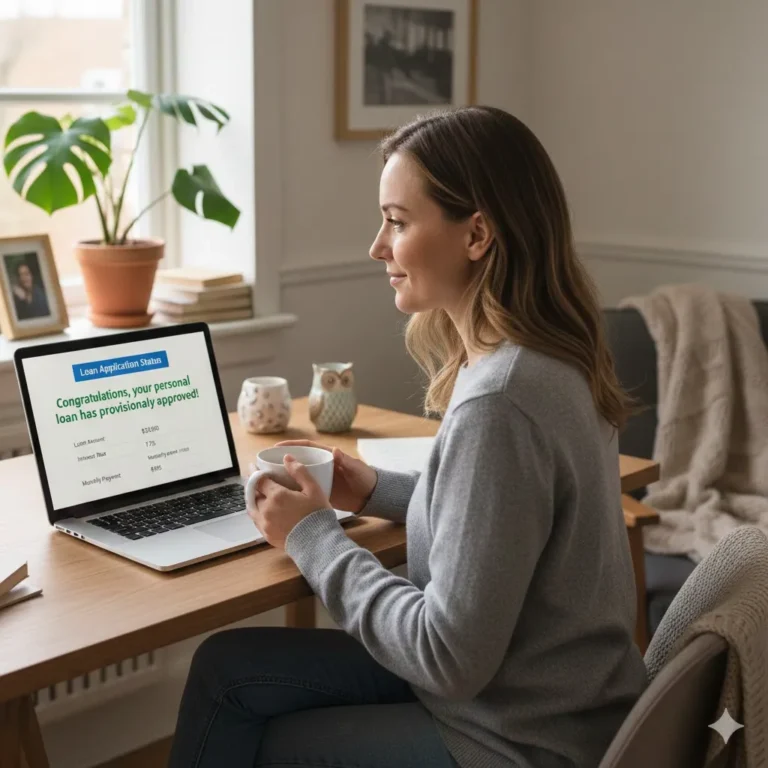
Discover practical bad credit loan options, what lenders look for, and how to choose responsibly without worsening your credit.
Finding bad credit loan options can feel overwhelming—especially when your credit score isn’t at its best. The good news is: lenders don’t rely on credit score alone. Many loan types and alternative options exist that consider income, employment stability, and repayment ability.
Before applying, it’s important to understand the trade-offs, costs, and how each option can affect your credit long-term.
What “Bad Credit” Really Means
A “bad credit” rating typically refers to a score below about 620 (though exact thresholds vary). Scores in this range can make traditional loans harder to qualify for, but they don’t eliminate all lending options.
Many lenders use additional criteria like income, employment history, and banking patterns to underwrite loans that aren’t purely score-based.
Common Loan Options for Bad Credit
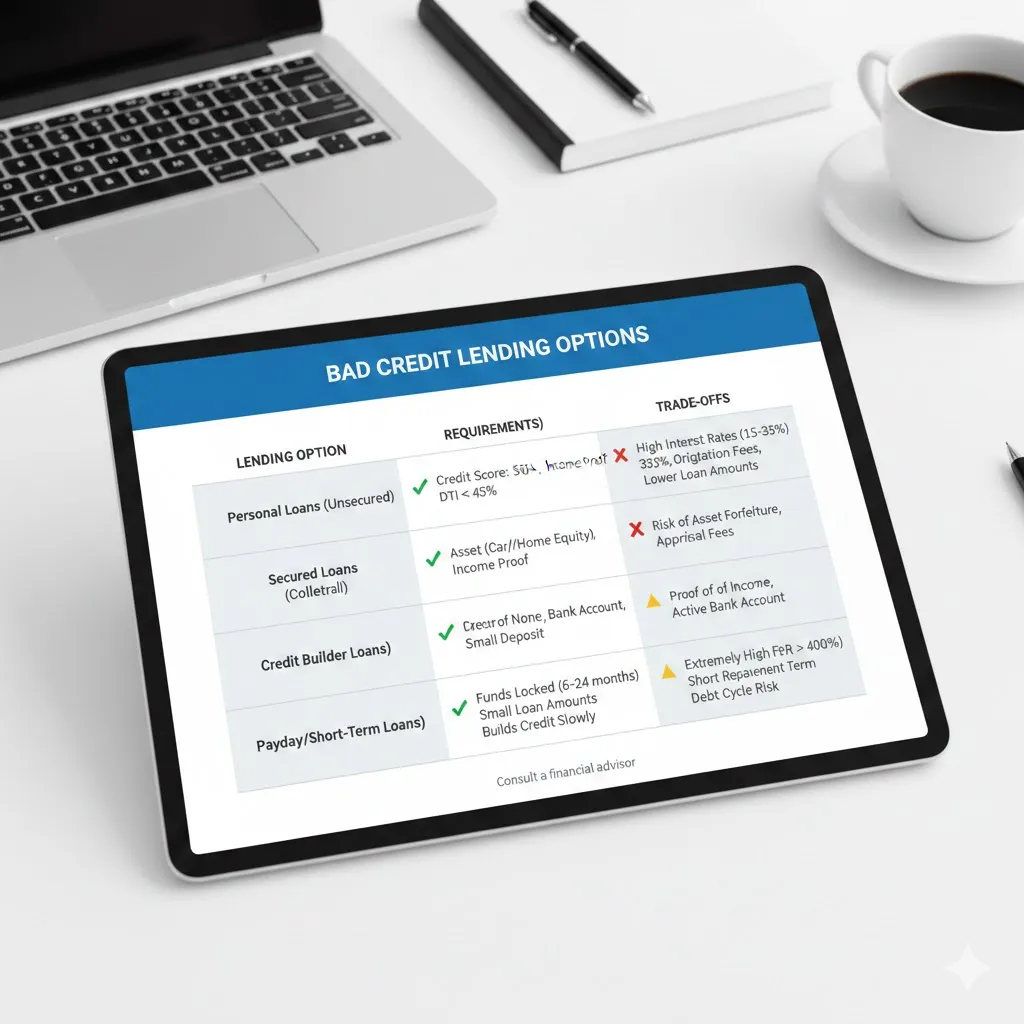
Here are loan types frequently available to borrowers with lower credit scores — each with pros and cons:
| Loan Type | Best For | Typical Requirements | Notes |
|---|---|---|---|
| Credit Union Loans | Lower rates & community support | Membership, steady income | Often more flexible than banks |
| Online Installment Loans | Quick access | Income verification | Rates vary widely |
| Secured Loans | Lower risk for lender | Collateral like car or savings | Risk of losing collateral |
| Co-signed Loans | Higher approval odds | Co-signer with good credit | Co-signer is responsible too |
| Payday Alternative Loans (PALs) | Small short-term loans | Credit union membership | Lower cost than payday loans |
| Peer-to-Peer (P2P) Loans | Community-based lending | Profile & income | Rates vary by profile |
This table helps you see which options match your situation, budget, and urgency.
Credit Unions — Flexible & Often Lower Cost
Credit unions are member-owned, community-oriented financial institutions. They often consider factors beyond score, like your banking history and steady income.
Many credit unions offer small personal loans with lower rates and more flexible terms than payday or high-fee lenders. Those with bad credit sometimes find approvals easier here — especially if they already have accounts.
Secured Loans — Trade Collateral for Easier Approval
Secured loans use collateral like a car, savings account, or certificate of deposit (CD) to back the loan. Because the lender has something to claim if you default, approval odds can be higher and interest rates lower.
However, you should never pledge collateral you can’t afford to lose. The benefit of easier approval comes with the risk of forfeiting the asset if payments falter.
Co-Signed Loans — Share Credit Power
A co-signed loan means another person with better credit guarantees your debt. This often unlocks lower rates and higher approval odds.
But here’s the reality: if you miss payments, the co-signer is fully legally responsible. It’s a powerful tool, but one that demands clear communication and trust.
Alternatives to Traditional Loans
Not all solutions involve borrowing in the usual sense:
- Payday Alternative Loans (PALs) — Offered by some credit unions, with lower costs than payday loans.
- Peer-to-Peer Lending — Platforms match individual lenders and borrowers; rates depend on your full profile.
- Borrowing From Retirement or Savings — Not ideal due to risk, but sometimes cheaper than high-interest loans.
These options require careful evaluation. Quick access shouldn’t override long-term stability.
Disclaimer
This article is for general informational purposes only. It does not constitute financial or lending advice. Loan terms, rates, and eligibility vary widely. Consult financial professionals before applying.
Pro Insight
The most important factor isn’t just approval—it’s whether you can realistically afford the loan payments. A loan that approves but squeezes your budget can worsen credit over time.
Quick Tip
Always calculate your monthly payment and total interest cost before borrowing—don’t focus on the loan amount alone.
Frequently Asked Questions
Can I get a loan with a credit score under 600?
Yes — certain lenders, credit unions, and alternative platforms consider income and other factors beyond score.
Will applying for a bad credit loan hurt my credit?
A hard inquiry can lower your score slightly; multiple inquiries in a short period can have a larger combined effect.
Are bad credit loans more expensive?
Often yes — lenders price higher risk with higher interest rates and fees.
Should I borrow from friends or family instead?
Only if terms are clear and agreed in writing to avoid relationship strain.
Can improving my credit help lower loan costs?
Absolutely — even modest score improvements can unlock significantly better rates and options.
Conclusion
Finding bad credit loan options is possible when you understand your alternatives. Credit unions, secured loans, co-signers, and community-oriented platforms often provide paths where traditional banks may not.
But the smartest approach isn’t just approval — it’s sustainable borrowing. Choose options that fit your real repayment capacity and support better credit over time.
Trusted U.S. Resources
Consumer Financial Protection Bureau — Loans & Credit
https://www.consumerfinance.gov
Federal Trade Commission — Credit & Debt
https://www.ftc.gov
MyFICO — Understanding Credit Scores
https://www.myfico.com
About the Author